Today in
class, we mainly focused on two things: evaluating how a text accomplishes its
purpose, and adding specificity to our writing.
We got into
our groups from yesterday, and continued to talk about the “Sinners of an Angry
God” speech that we’ve been looking at since Friday.
First, we were
given two questions to answer about the text:
1.What does
this text do?
2. How does
this text do it?
Basically,
we had to explain what the purpose of the text is, and how the text
accomplishes that purpose. This is called rhetorical analysis. So, for “Sinners
of an Angry God,” the purpose of the speech was to urge people to obey God, or else he will punish them. The
author persuades his audience by using a lot of pathos to frighten them, and
very little logos.
After we discussed it, each group was given a dry-erase marker to
construct a well-written thesis statement that answered the two questions
above. These were the 3 thesis statements that our class wrote on the board:
1. John
Edwards successfully instills fear into his audience by the use of his powerful
and disturbing illustrations of hell, strong verbs, and a distressful message
of God’s wrath.
2. “Sinners
in the Hands of an Angry God” strikes fear into the heart of the audience by
the use of his threatening and ominous words.
3. “Sinners
in the Hands of an Angry God” drills fear into the audience by using pathos
through intense imagery and metaphors.
As we read
over the sentences that were written on the board, we underlined the verbs that
were used in each one. Mr. Rivers emphasized the importance of using strong
verbs in thesis statements. "Instills," "strikes," and "drills" are examples of strong verbs from the sentences above.
After that,
we started to move on to our next objective, which was to modify our thesis
statements and make them more specific by “interrogating” them. This means
asking questions- who, what, when, where, why, and how- and adding in those
details. In my group, we made our sentence more specific by changing it to
this:
“Sinners in
the Hands of an Angry God,” a sermon by the 18th century minister John Edwards,
drills fear into the audience to stress the importance of obedience to God and
prevent people from committing sin, by using pathos through intense imagery and
metaphors.
As you can
see, this thesis statement is more specific because it includes the details
such as who wrote it, when and why he wrote it, and how he persuades his
audience.
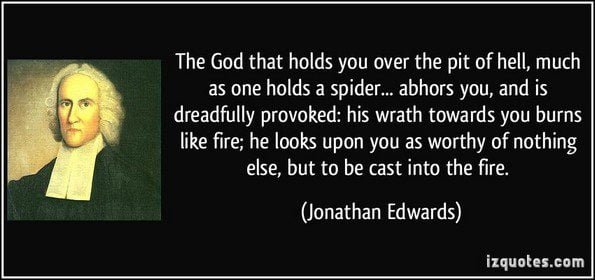
This quote demonstrates an example of imagery from the speech that provokes fear in the audience.

GREAT post here, Nicole! This has so many great details and an awesome picture that takes your analysis to the next level. I love how you incorporate your own learning (sentences, notes, etc.) as well as our class-wide inquiries.
ReplyDelete