Today, we started off class with Rivers pointing to the new, massive good fortune/bad fortune chart on the other white board. We discussed what we went over yesterday, which was Gatsby's childhood and the bad fortune he had in the beginning of his life. We then broke up into our groups for a brief couple minutes to talk about the status change he had in his life. Then, Rivers brought the class back together so we could go over what we talked about. The first status change that was brought up was Gatsby going to St. Olaf college and being a janitor, which would be a step up in status from his life before. The quote in the book for this is, "An instinct toward his future glory had led him, some months before, to the small Lutheran college of St. Olaf in southern Minnesota. He stayed there two weeks, dismayed at its ferocious indifference to the drums of his destiny, to destiny itself, and despising the janitor's work with which he was to pay his way through." We discussed this quote and the idea of romanticism and transcendentalism was brought up about this quote, because of how Gatsby did what he wanted. Then, the next status change brought up was Gatsby clam digging, hunting salmon, having bad dreams, and living for survival. This change brought his status down, but then he met Dan Cody, who gave Gatsby a new job with better money. Dan Cody brought Gatsby's status up quite a bit from where he was at before. Rivers asked the class a question, “Is Gatsby’s status change the shape of the American Dream?” The class discussed this, and Big Kev said that since he made his money doing bad things that it did not embody the American Dream. Rivers fired back with saying that the core of the American Dream was built on people doing ‘bad’ things to create a mass amount of wealth.
My picture won't post to this blog so I'll leave the link here for anyone who wants to see the hottest man in the world: cha boy Dan Cody
https://www.google.com/search?q=great+gatsby&rlz=1CDGOYI_enUS663US663&hl=en-US&prmd=ivbn&source=lnms&tbm=isch&sa=X&ved=0ahUKEwiTwaKkqYnRAhUM9YMKHa8JBPgQ_AUIBygB&biw=375&bih=591#hl=en-US&tbm=isch&q=dan+cody+the+great+gatsby&imgrc=RPuoaEAOemfX-M%3A
Thursday, December 22, 2016

Wednesday, December 21, 2016
Blog 4 12/21/16 Kevin Berlin
For today's class, our objectives were to be able to analyze how Gatsby’s change in status symbolizes the American Dream as a topic and to be able to interpret how Gatsby’s change in status develops a theme about the American Dream. To practice this skill, Mr. Rivers let us break off into our groups. Our task was to find four event/quotes from the story of Gatsby’s youth and plot Gatsby’s status during each event. Two popular quotes that were found were, “For over a year he had been beating his way along the south shore of Lake Superior as a clam digger and a salmon fisher in any other capacity that brought him food and bed.” This quote shows that unlike Tom, Gatsby has to work for his wealth, and was not born into wealth like Tom was. Another quote found by all five groups was, “ His parents were shiftless and unsuccessful farm people-his imagination had never really accepted them as his parents at all.” This quote also shows that Gatsby did not just come from a not wealthy family, but also had very low status.
Right before the class was going to discuss a third quote/event, the choir students showed up to sing christmas carols for the class. Little did I know how great they were. They sang two songs, most of the singers actually singing and a couple of them were beat-boxing. The whole class loved it. Not going to lie I was very impressed myself, sadly I was not able to make it to their concert tonight.

Christmas carolers →
Alexis Reeder
December 21, 2016
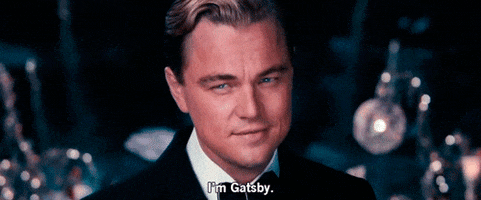
Today in class we were able to analyze how Gatsby’s change in status symbolizes the american dream as a topic and how to interpret how Gatsby’s change in status develops a theme about the american dream. Mr. Rivers drew a chart of bad fortune and good fortune and my group and I selected four events/quotes from the story of Gatsby’s youth and plot Gatsby's Status during each event. Sergei and a person from each group had a quote from The Great Gatsby, "His parents were shiftless and unsuccessful farm people--his imagination had never really accepted them as his parents at all." We discussed how he didn't come from money, he had to work his way up to be successful, and he did not want to be apart of his family. We also talked about how/why Nick cares about Gatsby's life. In chapter 6, Nick wonders why Gatsby has a lot of money but he is a "bootlegger". Jaxon predicts that Nick will send someone to find out how Gatsby got to where he is now.
December 21, 2016
Today in class we were able to analyze how Gatsby’s change in status symbolizes the american dream as a topic and how to interpret how Gatsby’s change in status develops a theme about the american dream. Mr. Rivers drew a chart of bad fortune and good fortune and my group and I selected four events/quotes from the story of Gatsby’s youth and plot Gatsby's Status during each event. Sergei and a person from each group had a quote from The Great Gatsby, "His parents were shiftless and unsuccessful farm people--his imagination had never really accepted them as his parents at all." We discussed how he didn't come from money, he had to work his way up to be successful, and he did not want to be apart of his family. We also talked about how/why Nick cares about Gatsby's life. In chapter 6, Nick wonders why Gatsby has a lot of money but he is a "bootlegger". Jaxon predicts that Nick will send someone to find out how Gatsby got to where he is now.
Almost to the end of class, a couple of carolers came to our room and sang "Silent Night" and "Carol of the bells". the sound of them singing was like angles singles. The sound was relaxing and joyful. In my opinion, this was the best singing I've heard from a group of kids my age.
Tuesday, December 20, 2016
Alex Pegher Blog 12/20/16
Today in class we began to discuss chapter 6, which we had all read the night before (hopefully). We had a short reading check at the beginning of class and then we dove into analyzing chapter 6 of the Great Gatsby. We discussed how Fitzgerald creates animosity in the chapter by utilizing Tom, Gatsby, Daisy, and Nick to make the mood of the chapter much more tense. Rivers made a point that, following with Fitzgerald's modernism, Tom really isn't at fault here. It's actually Gatsby, who many readers would consider "the protagonist" that starts messing with and deliberately trying to piss off Tom.
These deer are analogous to Tom and Gatsby in the tension they create. Tom and Gatsby begin to butt heads in this chapter and their animosity toward one another is becoming more and more clear.

These deer are analogous to Tom and Gatsby in the tension they create. Tom and Gatsby begin to butt heads in this chapter and their animosity toward one another is becoming more and more clear.
Sunday, December 18, 2016
12-16-16 blog Gillian Kee
In the past few class periods we have been talking about Chapter five of The Great Gatsby. In Chapter five Daisy and Gatsby see each other for the first time in FIVE years. Gatsby is obviously very nervous (rightfully so), so he is acting very crazy running through his head the worst case and the best case scenario....
 That was all we talked about in class, Chapter five ends with Nick leaving Jay and Daisy alone, so who knows what will happen.
- Worst:
- She doesn't love him anymore and stays with Tom
- Best:
- they runaway together and live happily ever after
During class on Friday we talked about what is standing in the way of Daisy of her running away with Jay....well
1. Her child, with her child in the picture her running away with Jay and leaving Tom and her baby, she would defiantly lose the child.
2. TOM
3. It has been five years just because she has loved Jay once does not mean she still loves him.
Saturday, December 17, 2016
12.17.16 - H. Newbold Blog 1
In class on Friday we talked about the significance of the green light in The Great Gatsby. We referenced page 92 where it was mentioned in chapter 5, then proceeded to flip BACKWARDS and reflect at last paragraph in chapter one where we had previously read about Gatsby looking over the dock to see the green light; this is where the green light was first mentioned. We now realize that the light represents how far Gatsby is from getting to Daisy. We established that Gatsby wants to be with Daisy, run away with her, be in love - he doesnt care about his house or his parties he just wants to be with Daisy. The light is a symbol for how close/ how far gatsby is, the literal figure is that its just this light across this bay but the figurative meaning is that even though Gatsby seems so close to her he is still in a sense so far.
Secondly we begun making a list of why Gatsby may or may not be able to be with daisy in the end/ what might stand in his way. (Although we only got to the "Why nots"and didnt get to "why"s by the end of class)
Why Gatsby might not be able to be with Daisy;
Child
Tom
Divorce/stigma
Homework: read chapter 6 for tuesday think of the question "Whats different about the party in Chapter 6 compared to the one in the previous chapters?"

Thursday, December 15, 2016
Katie McGuckin
Blog Post
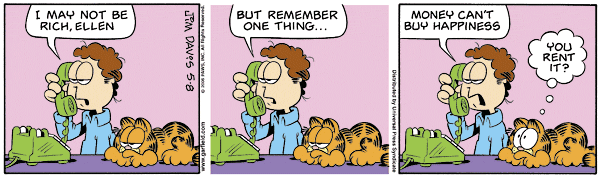
Today in class, we began to research and work on our "Does Money Buy Happiness?" assignment, which now due on December 18 (next Monday). All work done on the project should be included in the power-point supplied to each student and contain multiple quotes and evidence to support their claim on whether or not money can make people happy. The first slide should be filled out, in sentence form, stating if money can or can't buy happiness and then giving three reasons why. After the first slide, the next two rely on finding two articles, from reliable sources, supporting your claim and have their links posted somewhere on the slides. Once an article is found, you need to select a quote and incorporate it into a sentence through leading into your point, write the quote, cite it, and explain its meaning and how it helps prove your claim. Next, you need to search through The Great Gatsby for two quotes that also support the claim and repeat the motions that were followed in the previous two slide for the articles. The final slide asks you include a song/video that expresses how money may or may not give a person joy, quote a line and describe how this is shown, then paste a link on the slide.
For my power-point, I came to the conclusion that money cannot buy people happiness because it will run out eventually, lead to unseen problems (like corruption, strain relationships, warped views on the world and others, etc.), and will never be able to replicate certain things that are not bought. I chose two articles that gave evidence showing money cannot improve a person's state of enjoyment because it causes people to put their interests into material things that are seemingly nice but unable to solve or improve specific problems in their lives, leading them to pay less attention to things or people they used to find fulfillment in. The song I selected to show that money can't buy joy, was "Can't Buy Me Love" by The Beatles because it's one of my favorite songs by the band due to its catchy tune and lyrics and how it is probably one of the clearest songs I know of that easily expresses that money isn't everything and that some of the best things in life cannot be bought. An example of a quote that says the song's message, is in the chorus, when the words, "Can't buy me love" are sung, which are repeated multiple times in the song to emphasize its importance (even shown in the the song's title). To summarize, in class we started working on this power-point revolving around the opinion of money bringing or not bringing happiness to people, finding evidence in different forms of literature/media and connecting them back into your main claim.
Blog Post
Today in class, we began to research and work on our "Does Money Buy Happiness?" assignment, which now due on December 18 (next Monday). All work done on the project should be included in the power-point supplied to each student and contain multiple quotes and evidence to support their claim on whether or not money can make people happy. The first slide should be filled out, in sentence form, stating if money can or can't buy happiness and then giving three reasons why. After the first slide, the next two rely on finding two articles, from reliable sources, supporting your claim and have their links posted somewhere on the slides. Once an article is found, you need to select a quote and incorporate it into a sentence through leading into your point, write the quote, cite it, and explain its meaning and how it helps prove your claim. Next, you need to search through The Great Gatsby for two quotes that also support the claim and repeat the motions that were followed in the previous two slide for the articles. The final slide asks you include a song/video that expresses how money may or may not give a person joy, quote a line and describe how this is shown, then paste a link on the slide.
For my power-point, I came to the conclusion that money cannot buy people happiness because it will run out eventually, lead to unseen problems (like corruption, strain relationships, warped views on the world and others, etc.), and will never be able to replicate certain things that are not bought. I chose two articles that gave evidence showing money cannot improve a person's state of enjoyment because it causes people to put their interests into material things that are seemingly nice but unable to solve or improve specific problems in their lives, leading them to pay less attention to things or people they used to find fulfillment in. The song I selected to show that money can't buy joy, was "Can't Buy Me Love" by The Beatles because it's one of my favorite songs by the band due to its catchy tune and lyrics and how it is probably one of the clearest songs I know of that easily expresses that money isn't everything and that some of the best things in life cannot be bought. An example of a quote that says the song's message, is in the chorus, when the words, "Can't buy me love" are sung, which are repeated multiple times in the song to emphasize its importance (even shown in the the song's title). To summarize, in class we started working on this power-point revolving around the opinion of money bringing or not bringing happiness to people, finding evidence in different forms of literature/media and connecting them back into your main claim.
Wednesday, December 14, 2016
Olivia Agius 12/14
Today’s class was started off with reading last night’s interesting blog. Mr. Rivers read it aloud to us in order for us to understand how dramatic the scene described was. The blog related to our recent topic of TRUTH, and what truth really means, along with how truth is different depending on perspective. Also, the blog related to truth because most people agreed that a sum of what was said in the blog was false. After reading the blog, Mr. Rivers quickly mentioned that the “Does Money Buy Happiness?” assignment is due Friday instead of Thursday. Then we went back towards our book, The Great Gatsby, and were told to discuss in groups the relationship between Daisy and Gatsby throughout chapter five. My group said that at first the two were awkward and didn’t know how to react after the long awaited reunion. However, towards the middle they get slightly more comfortable together, and as the chapter progresses, so does their relationship. By the end the two are so enticed by each other that they forget about Nick. Our class then came back together and discussed the same thing. Then, we talked about the weather in chapter five, and the symbolism behind it. At first in the chapter it was raining. The rain symbolized Jay Gatsby’s unease, nervousness, and how distracted he was. These feelings came from how nervous he was about talking to Daisy after five years. Then, the sun comes out and is shining. This was the turning point of their relationship, and is when Nick, Gatsby, and Daisy all go over to Gatsby’s large colonial mansion. The sun symbolized Gatsby becoming less nervous. By the end of the chapter Nick leaves the mansion alone, which is symbolized by rain pouring down. Along with weather being symbolic, the class said the clock was symbolic as well. It symbolizes time running out for Gatsby to be with Daisy, as well as Gatsby attempting to rekindle an old romance. The fact the clock was already broken symbolized that even if Gatsby and Daisy still felt in love with each other, something could go wrong. Another discussion was the best case scenario that could occur from Daisy and Gatsby reuniting. Some answers were them getting married, or them running away together. Contradictory, we also came up with the worst case scenarios, Tom finding out or she tells Gatsby she is in love with Tom. We ended the period left with a question; “Is Daisy a gold digger?” and, “by whose standards and by whose eyes would she be considered a gold digger?”.

Nicole McGahey 12/14
12/14/16
At the beginning of class, Mr. Rivers showed us a very creative blog post that was made by a student in his 6th period class yesterday, and we talked about it a little bit.
After that, we discussed Chapter 5 of The Great Gatsby. Symbols were very prevalent in this chapter, so we examined a few of them.
In the beginning of the chapter, there was pouring rain. During the rain, Gatsby was very nervous about meeting with Daisy. He was so nervous that he couldn’t think about anything else, which is shown in this passage: “An hour later the front door opened nervously, and Gatsby in a white flannel suit, silver shirt and gold-colored tie hurried in. He was pale and there were dark signs of sleeplessness beneath his eyes.
"Is everything all right?" he asked immediately.
"The grass looks fine, if that's what you mean."
"What grass?" he inquired blankly. "Oh, the grass in the yard." He looked out the window at it, but judging from his expression I don't believe he saw a thing.” (Fitzgerald 84).
Throughout the chapter, the weather changed as the moods of the characters changed.
Another important symbol in this chapter was when Gatsby knocked over the broken clock, and nervously put it back, apologizing to Daisy, “I’m sorry about the clock.” (Fitzgerald 86). The clock symbolizes his attempt to go back in time and recreate his time with Daisy five years ago. The fact that the clock was already broken represents the fact that it is not possible to go back to the past.
While we were talking about this, the bell abruptly rang.
This video shows the scene where Gatsby knocks the clock off the mantle.
Tuesday, December 13, 2016
Megan Lynch 12/13
Today in class Mr. Rivers was absent. Ms. Dalia started off the class by discussing the chapter we read last night for homework. This was the first chapter in which we got to see Gatsby and Daisy interact. After this we went to the google classroom to look at one of the assignments for today. For this assignment we had to analyze Gatsby and Daisy’s emotions for this chapter, and when they met each other. We analyzed that by reading two passages from The Great Gatsby. The class agreed that Daisy and Gatsby were overcome with emotion from not seeing each other for years, missing each other, and now realizing what they have been missing out on by having left each other. Gatsby was nervous for awhile, while Daisy was emotional and cried over ridiculous things for hidden reasons. This brought up the topic that having money, or having “everything” does not always bring happiness. Daisy is rich herself, she took an amazing family name, has good friends, not much stress in her life, however she doesn’t have someone she loves or loves her. Now, we began our new assignment which is due Friday. We have to read an article called, “Why I Gave Up a $95,000 Job to Move to an Island and Scoop Ice Cream”. Together, as a class we read the article. After reading the article we discussed whether it was practical, or the right decision for the author to leave her almost six figure paying job to live in a shack on an island. This article relates to how Daisy is feeling in the Great Gatsby. She might have been given a luxurious life, but it wasn’t a life that she imagined. After discussing the article we got into the actual assignment. A powerpoint is due Friday which must include a relatable song to your opinion, a Gatsby quote, and a second article to back you up.


Monday, December 12, 2016
Jaxon Mase 12/12
Today in class, we started with defining a WASP (White Anglo Saxon, Protestant). We defined them as protestant being a christian religion, anglo saxon as english and norther european, and white as a complicated connotation of skin color. Mr. Rivers then connected this to the amount of our presidents that have been wasps. We have had 42 WASP presidents out of 44 presidents. He then asked the question of how one becomes the president. The answer is college. If you look at the colleges that our past presidents have gone to are mostly Ivy league Colleges, and to get into these colleges you have to have a high social status (wealth).
The talk of status used to get to these colleges that produces wealth is connected to Gatsby because he went to Oxford, a very prestigious school. Because of this, Gatsby is very egocentric. On page 67, Nick Carraway is shocked to hear that Gatsby went to Oxford. Its such a famous school and Nick notices his ego. Looking back on page 53, Gatsby calls Nick "old sport" which at first seems to show endearment or brother hood but really is just trying to be familiar without being familiar and really condescending. Gatsby has an ego from his past at Oxford thinking he is a big man and everyone else is below him. He uses this condescending language to get something out of Nick (dinner with Daisy).
The ego of everyone in this is also biased. When Nick is talking to Mr. Wolfshine, Nick realized an abnormality in his pronunciation of Oxford as 'Oggsford" and points it out in he text. (page 71) This represents the bias towards people not considered white in he 1920's, Jews, Irish, Exc.
The obvious segregation in race and wealth displays Fitzgerald's (author) view that race and religion is what caused the wealth gap, and that the rich are given an easier path to success.

This shows the wealthy's advantage (connection to Ivy League Colleges and money) that helps them get to the top over the common man.
The homework is to read chapter five and look at color and weather and how they are being used as symbols. Rest of period used to start reading.
The talk of status used to get to these colleges that produces wealth is connected to Gatsby because he went to Oxford, a very prestigious school. Because of this, Gatsby is very egocentric. On page 67, Nick Carraway is shocked to hear that Gatsby went to Oxford. Its such a famous school and Nick notices his ego. Looking back on page 53, Gatsby calls Nick "old sport" which at first seems to show endearment or brother hood but really is just trying to be familiar without being familiar and really condescending. Gatsby has an ego from his past at Oxford thinking he is a big man and everyone else is below him. He uses this condescending language to get something out of Nick (dinner with Daisy).
The ego of everyone in this is also biased. When Nick is talking to Mr. Wolfshine, Nick realized an abnormality in his pronunciation of Oxford as 'Oggsford" and points it out in he text. (page 71) This represents the bias towards people not considered white in he 1920's, Jews, Irish, Exc.
The obvious segregation in race and wealth displays Fitzgerald's (author) view that race and religion is what caused the wealth gap, and that the rich are given an easier path to success.
This shows the wealthy's advantage (connection to Ivy League Colleges and money) that helps them get to the top over the common man.
The homework is to read chapter five and look at color and weather and how they are being used as symbols. Rest of period used to start reading.
Thursday, December 8, 2016
Sarah Haag December 8th, 2016
We started by identifying our objectives which were IWBAT distinguish between Framing narratives and nonlinear narratives, and IWBAT analyze how music and poetry present these modern and romantic ideas. Mr. Rivers then went over framing narrative within Frankenstein and Rip Van Wrinkle. Framing is a story within a story and how are they different. We identified it through a movie called, “the Princess Bride”. Where a grandpa in a modern world tells a story about a couple in a non-fiction, medieval world to his son distinguishing a story within a story. We discussed that framing goes way back into literature with authors such as Homer, Chaucer, and Shakespeare. Framing is an homage to the past (very romantic) showing the value of the story. It also brings emphasis on folk and how they talk. We then discussed Linear narrative which is a logical progression: Cause and effect making the text complex or cloudy.

Tuesday, December 6, 2016
Jess Esso
December 6, 2016
today in class we started it off by picking it up where we left off the day before, talking about how in chapter 3 we finally meet Gatsby, our supposed main character of our book. we went on to then establish more about our narrator nick, and the very last thing he said of chapter 3.
"Every one suspects himself of at least one of the cardinal virtues, and this is mine: I am one of the few honest people that i have ever known."
we analyzed this sentence to fully understood what nick meant by this. we figured out that this character has a very big ego and he is very full of himself. he himself believes he is the only honest person out of everyone else, but yet he lies just as much as other people. we find out that he in fact is talking about Jordan while making this statement. he finds out that Jordan makes 2 lies within the time that they have been seeing each other. 1 about leaving the hood of a convertible down when it was raining and the other about cheating at the semi final championship golf tournament. nick later goes on to say that Jordan is " incurably dishonest" meaning that he will not hold a grudge against her because all women lie. he has been lying himself about what is going on with him and Jordan, but also with him and another girl that all we know about is that she sweats. nick makes these judgements to justify his own actions. this tells us a lot about how nick is as a person. it tells us he is very self centered and, projects blame onto other people, possibly not to feel the guilt about his actions, its a possibility but we won't know for sure until we learn more about him not only as our narrator but as a person in general.
December 6, 2016
today in class we started it off by picking it up where we left off the day before, talking about how in chapter 3 we finally meet Gatsby, our supposed main character of our book. we went on to then establish more about our narrator nick, and the very last thing he said of chapter 3.
"Every one suspects himself of at least one of the cardinal virtues, and this is mine: I am one of the few honest people that i have ever known."
we analyzed this sentence to fully understood what nick meant by this. we figured out that this character has a very big ego and he is very full of himself. he himself believes he is the only honest person out of everyone else, but yet he lies just as much as other people. we find out that he in fact is talking about Jordan while making this statement. he finds out that Jordan makes 2 lies within the time that they have been seeing each other. 1 about leaving the hood of a convertible down when it was raining and the other about cheating at the semi final championship golf tournament. nick later goes on to say that Jordan is " incurably dishonest" meaning that he will not hold a grudge against her because all women lie. he has been lying himself about what is going on with him and Jordan, but also with him and another girl that all we know about is that she sweats. nick makes these judgements to justify his own actions. this tells us a lot about how nick is as a person. it tells us he is very self centered and, projects blame onto other people, possibly not to feel the guilt about his actions, its a possibility but we won't know for sure until we learn more about him not only as our narrator but as a person in general.
Monday, December 5, 2016
12/5/16 Soumya
We started our class off today by watching a few sci-fi trailers.
The first trailer we watched was that of the new Guardians of the Galaxy movie. It started off very serious, with Rocket Raccoon in the background warning about a really powerful bomb. Then it cuts the him telling Groot not to press the button, and after that funny dialogue follows. We discussed how Guardians of the Galaxy itself shifted away from the darker source material to an enjoyable comedy adventure movie, and how for other movies, like certain 90s Batman movies, it didn't work so well. I've yet to watch or read anything of Guardians of the Galaxy, but I definitely plan to, and I appreciate the tonal shift, as I like comedies. I can also imagine that it was a risk on the creators' part, since there are so many people that normally complain for shift from source material.
We then watched The Last of US trailer, a trailer for a zombie videogame, which I actually never knew much about until today. The trailer we watched wasn't that sci-fi itself, but it did hook me in. The girl's singing was haunting, and it set the tone for the post-apocalyptic world. What she said at the end got me excited.
The last trailer we watched was that of Mass Affect Andromeda, another video game. The discussion that came out of this one was about what brings together, or separates, space sci-fi and stuff like Bradbury. Both have room for advanced technology (space obviously). Anything set in space has more room for bending rules, only because physics is so different in space.
The main part of the class was exploring foils in Fahrenheit 451. One group had to come up with ways Clarrise and Mildred were foils, and the other had to do Montag and Beatty (I was in this group). We didn't do much except talk within our own group; half our class time was towards talking about trailers. I think we're going more into this tomorrow.
Now that we're focusing on foil for Fahrenheit 451, I recognize it more often. I mean, I knew what is was before, but I didn't think about it as often. Here's a video about foil examples in popular texts.
The first trailer we watched was that of the new Guardians of the Galaxy movie. It started off very serious, with Rocket Raccoon in the background warning about a really powerful bomb. Then it cuts the him telling Groot not to press the button, and after that funny dialogue follows. We discussed how Guardians of the Galaxy itself shifted away from the darker source material to an enjoyable comedy adventure movie, and how for other movies, like certain 90s Batman movies, it didn't work so well. I've yet to watch or read anything of Guardians of the Galaxy, but I definitely plan to, and I appreciate the tonal shift, as I like comedies. I can also imagine that it was a risk on the creators' part, since there are so many people that normally complain for shift from source material.
We then watched The Last of US trailer, a trailer for a zombie videogame, which I actually never knew much about until today. The trailer we watched wasn't that sci-fi itself, but it did hook me in. The girl's singing was haunting, and it set the tone for the post-apocalyptic world. What she said at the end got me excited.
The last trailer we watched was that of Mass Affect Andromeda, another video game. The discussion that came out of this one was about what brings together, or separates, space sci-fi and stuff like Bradbury. Both have room for advanced technology (space obviously). Anything set in space has more room for bending rules, only because physics is so different in space.
The main part of the class was exploring foils in Fahrenheit 451. One group had to come up with ways Clarrise and Mildred were foils, and the other had to do Montag and Beatty (I was in this group). We didn't do much except talk within our own group; half our class time was towards talking about trailers. I think we're going more into this tomorrow.
Now that we're focusing on foil for Fahrenheit 451, I recognize it more often. I mean, I knew what is was before, but I didn't think about it as often. Here's a video about foil examples in popular texts.
Kayla Edwards 12/5/16
Today in class we had 2 objectives; IWBAT evaluate how modernists question the absolutism of romantic writers and IWBAT clearly integrate evidence that support a specific claim. Also we were assigned to have chapter four of The Great Gatsby read by Thursday. He also asked us to consider the question, what structural change happens in this chapter? as we read. Next we reviewed what we did on Friday and talked about perception and its affect on the modern idea of truth. We also discussed if we should trust Nick because at the end of Chapter 3 he says, “Everyone suspects himself of at least one of the cardinal virtues, and this is mine: I am one of the few honest people that I have ever known.”. My group decided we should trust him but also keep in mind that truth is subjective which means we only have one side of the story. Next we talked about balancing specificity and clarity when writing topic sentences and integrating evidence. We used two examples for this: one that was clear, but not specific, and one that was specific but confusing. Then we discussed as a group what was wrong with each sentence and how to improve them. For example, the topic sentence "He's just a man named Gatsby." is clear because there's nothing complex about it. However it doesn't give us enough information about who he is or why he's relevant. He also gave us another example (which I cannot remember because it was very long) that used way too many details that may not have all been relevant to the rest of the paragraph. For integrating he gave us too similar examples, one with a short quote that wasn't introduced or given context and one with a quote that was over 4 lines which gave us too much information. Using these examples we then made a paragraph balancing these two things about what we learned about Gatsby in Chapter 3.
 |
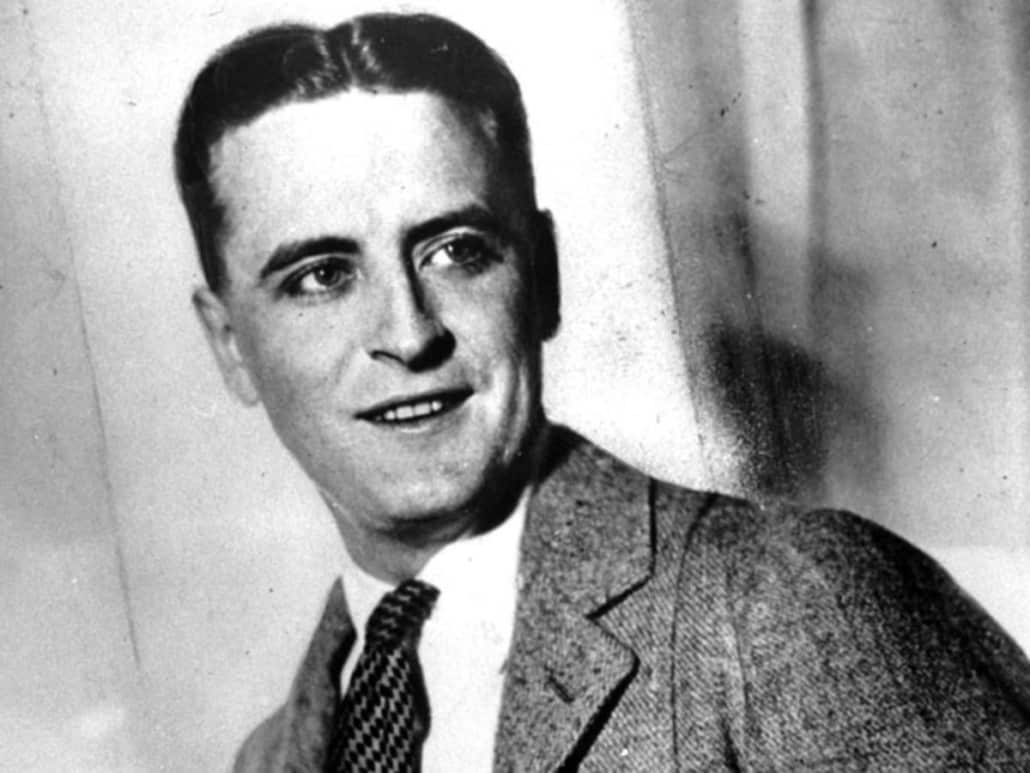
| F. Scott Fitzgerald, Author of The Great Gatsby |
Friday, December 2, 2016
John DePreker blog.
John DePreker
Blog 12/2/16
What the heck?
Today in class, we all sat down as usual turned on our computers and waited to be assigned directions. A sort of different start had taken place in class. It was Mr. Rivers and Mrs. Dalia watching the class while sitting on top of the desk and not saying a word at all. So, they did not say anything and we sat there in confusion about what we were to do for the period. We all honestly had no clue what was going on and some students made remarks such as jaxon saying, “Everyone be quiet” , well supposedly… Anyway, It was truly confusing to the point where he even felt sorrowful and chuckled at our reactions to this scene. I made the remark, “This would make a terrible blog!”, because nothing was being said or taught so I thought to myself, there is no verbal communication between him and us. He laughed as some other students did as well. Then after, a post on Google Classroom caught my eye and the students were asked to write a paragraph explaining their perspective on the past few minutes.
So after all of that paranoia, we got onto more (real) Classwork,
Perception- How our senses create meaning
Input:Success failure of senses.
Output:Success and failure of language
Pre-modernism truth is Binary
True/false
Modernists truth is based in perspective and subjective.
Output Lies in omission- not actively lying but not being truthful
Input Failure of the human brain especially memory
These notes symbolize basically the gist of the rest of the classwork. Remember that when talking about “Perception” you must think about the 5 senses (Sight,Hearing,taste,smell and touch)


Thursday, December 1, 2016
Kevin Berlin 12/1/16
In class today, we started off going into more depth of the Great Gatsby. We discussed the time period that the book takes place in and what was going on during this period. After that we moved into more literal and figurative practice. We first analyzed a picture/symbol of “Justice.” As a class we broke down the components of the picture and explained what each detail in the picture represented and symbolized. This picture represents literal aspects through the blindfold, sword, balance, and the scale. Figurative aspects are shown by fairness, justice, law has no bias, and punishment/justice of the law. Although the picture may not look to interesting, every little detail represents something bigger.
After the class analysed that symbol, we analysed “The Valley of Ashes”. We went over romantic and modern characteristics of the valley of ashes. We learned what romantic and modern qualities are in the Great Gatsby. For example, in the book when they say that a in the valley of ashes, ashes grown constantly on everything everywhere, when really no ashes grow, that is just a way of them saying the city is broken down and unmaintained. This is an example of Modernism. An example of romanticism in the book is the negative tone when talking about the valley of ashes. And how there is nothing positive about the city. Now because of the harsh reputation the city has it give the people that live there just as harsh as a reputation.
 <-- Justice
After the class analysed that symbol, we analysed “The Valley of Ashes”. We went over romantic and modern characteristics of the valley of ashes. We learned what romantic and modern qualities are in the Great Gatsby. For example, in the book when they say that a in the valley of ashes, ashes grown constantly on everything everywhere, when really no ashes grow, that is just a way of them saying the city is broken down and unmaintained. This is an example of Modernism. An example of romanticism in the book is the negative tone when talking about the valley of ashes. And how there is nothing positive about the city. Now because of the harsh reputation the city has it give the people that live there just as harsh as a reputation.
Subscribe to:
Posts (Atom)